Week 3: MINIMALIST FILM.
Minimalism in film appeared in the 1960s/’70s with minimalist art, where abstraction with its symbology and subjectivity were challenged and the artist focused on the medium used and presenting unconventional materials and avoiding the human influences on the pieces, ‘The minimal artists rejected the idea that art should reflect the personal expression of its creator. The work of art should refer to the art itself. The creation must be objective, in-expressive and non-referential.’ (Student Filmer, 2019).
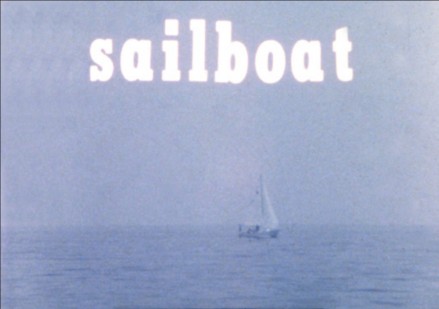
Specifically, in Film, we can see the use of film stock and different techniques to explore the materials that Film provides. Filmmakers not only explored the production possibilities, of movement or film stock effects but also in editing, with jump cuts or repetition. One of the most remarkable features of the minimalist film is the use of expectation, how the filmmakers make the audience ask themselves what will happen next in the narrative and how will change. As an example, we observe the film Sailboat by Joyce Wieland where we see the sea and several sailboats moving side to side, maybe by themselves or by the panning of the camera. We see how she plays with movement and variation of speed and length and the expectation of what else will happen in the film until she presents a human figure for the first time.
These also called structural films, base their structure or some rules that follow a thematic, like numbers, a single movement, or a single object (e.g Empire by Andy Warhol). Even if these films have a minimalistic aspect to them, we can still extract a more philosophical aspect to them where the audience are put under unusual length or points of view making viewers question and reflect the meaning of the film, ‘Probably the central reason why these films have been seen as philosophical is that they are self-reflective. That is, they make the medium of film as their subject matter; they are films about film.’ (Wartenberg,2007 p.117)

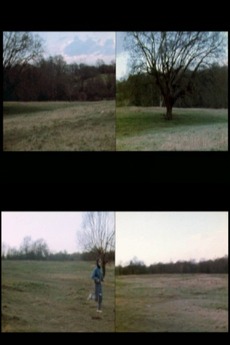
With the “game” of expectation, chance became an important role in these minimalist films, as audience members would be more attentive to these random situations in a long static film as something as quotidian as a field or a building. The chance technique was also borrowed from artist like Jackson Pollock who left the materials (paintings) fall on canvas however the paint “wanted” to fall. Chance is applied in film in different ways, by letting the environment bring something (e.g. a person randomly walking in front of the camera) or nature takes the role of the filmmaker as we can see in the film Wind Vane by Chris Welsby.
In the film Wind Vane, the director built a tripod that sustained two cameras and let them in a field where the wind would move the cameras like wind vanes, giving the sensation that the wind “chooses” what to film and show, coming again to that chance technique used in structural films. From this film, you could take how nature is involved in filming not only in the image but in the way that is made coming back to the principal that minimalist filmmakers followed of reducing the involvement of humans in filmmaking.
Structural or minimalist film then uses the minimal human involvement and leaves the meaning and situations to the small audience to understand or withdraw the meaning of the films being created, exploring how nature is involved in filmmaking and how film can be used as a material, not only as a moving image but as sound as well.
Bibliography:
Student Filmer, 2019, Minimalist Film: A Thought. Available on Student Filmer Webpage: https://studentfilmer.com/2015/08/17/minimalism-in-filmmaking-a-thought/ [Accessed 5th of February]
Wartenberg, Thomas E. Thinking on Screen: Film as Philosophy. (2007). Routledge: London and New York
Filmography:
Empire, Andy Warhol (1964). US
Sailboat, Joyce Wieland, (1967). Canada.
Wind Vane, Chris Welsby. (1972).UK
 Alternative Film
You have found some useful extra sources and are developing a good understanding of how avant-garde films work on the viewer.
LikeLike