WEEK 6: Landscape in Film

Week 6: Landscape in Film

Landscape and nature are represented in film in different ways. Nature is represented as wild and the pastoral and landscape aesthetics has been framed as the sublime and beautiful a form that we already observed in the cine poem where filmmakers got an example of art pieces from the impressionist movement and American landscapes. In this essay, I will look at different approaches and thoughts about nature represented in film and its impact on audiences concepts of nature. I will also expose some examples of films representing these natural landscapes and the different approaches taken.

One of the studies used in the film is ecocriticism since the early 2000’s it began in the literary criticism where scholars analyse texts that represented environmental concerns and explored the way in which literature considers the topic of nature. The same thing was applied to film where it observed the way nature is a portrait and thought of.

Since its official inception in the early 1990s and its recognition as a significant academic field of study, ecocriticism has expanded beyond the area of literary analysis to embrace the study of other forms of cultural production, including theoretical discourse, music photography, virtual environments, and film and video.

(Willoquet-Maricond, 2010, p. 1)

One of the main questions that raises about nature and its representation it come from philosophical dualism, where there’s a conflict of reality into two differed types when it comes to nature, it was opposed to culture although at the same time with Darwin’s evolution theory, humans were related and thought of being part of nature. These are complex relations were different theorists intent to join human culture and nature as they cannot be divided from one another. The environment representation in film how nature is not in a far away position in respect to humans but interconnected, as ecology shows us. The representation in film shows how the human body and materialism is still connected with nature and its forms.

An important side of nature in film and literature is the wilderness and its perfection creations in nature ‘Among the topics covered are the symbolic function of wilderness and its construction as a pristine Edenic space;’ (Willoquet-Maricond, 2010, p. 9). Theorists observe how important maintaining wilderness is, for diverse reasons like emotional reasons, spiritual connections or biodiversity. Other films, also show the effect that humans have had over the wilderness and nature, criticising our effects on it. These effects that we get is also called climate change which we have created, and so ecocinema makes an input on human influence on nature, landscapes or wilderness, making audience question their impact and using activism to send a message ‘Ecocinema overtly strives to inspire personal and political action on the part of viewers, stimulating our thinking so as to bring about concrete changes in the choices we make, daily and in the long run, as individuals and as societies, locally and globally.’ (Willoquet-Maricond, 2010, p 45.)
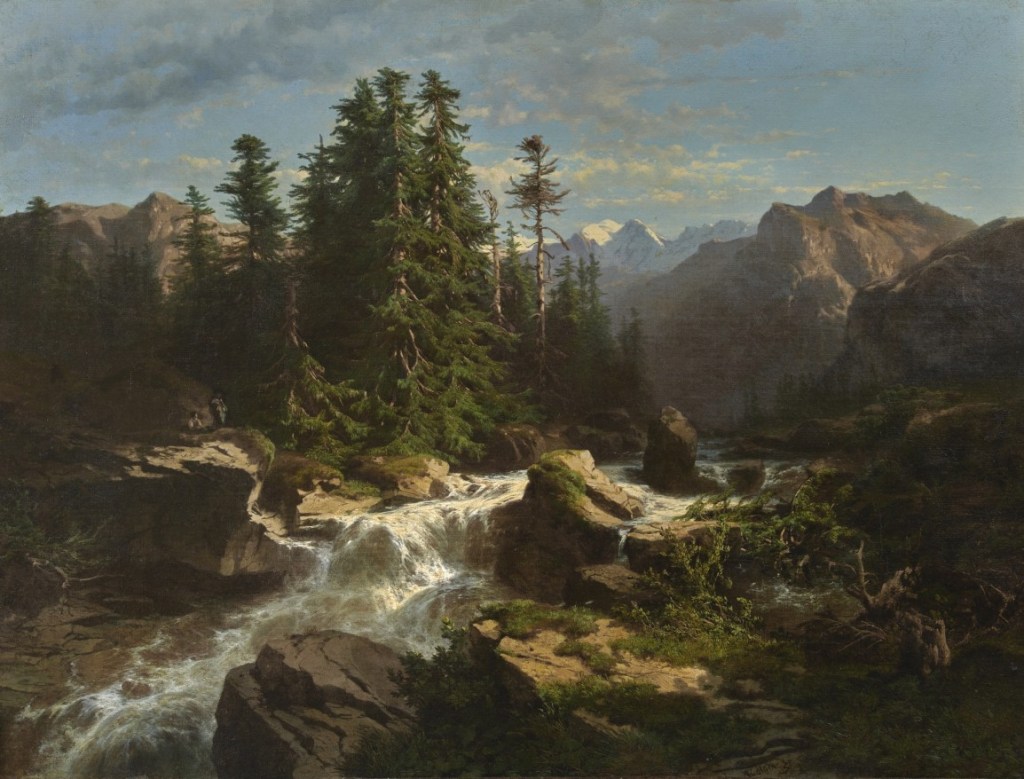
ALEXANDRE CALAME, TORRENT DE MONTAGNE PAR ORAGE, 1850.

Within this nature representation there’s different landscapes but it’s easy to separate them in two groups, the pastoral and the sublime. We saw these cases in cine-poem where artists used these landscapes in their films and paintings. The pastoral refers to a more rural human-affected environment, where nature is “tamed”, agriculture and farming are usually the best approaches for these images where the rural idyll shows (social harmony). Although this landscape seems ideal there’s some criticism involved with it, for example exploitation, difficulty of rural workers or inequalities of land ownership. On the opposite side of this dualism, we find the sublime, which fits a landscape that includes the wilderness mentioned before. In sublime landscapes its shown the mysterious, dark, strong and unruly nature that takes power over the beauty and light of the pastoral. The sublime also brings the human figure as insignificant and small where it outs people in a more respectful and humble approach to their existence.

Some film examples that we can find in alternative and structural film is Bill Viola’s The Passing where American landscape references are made and the human figure seems overtaking by nature. Viola uses the sublime landscape with the stillness and long establishing shot, showing the grandiose nature in the majority of his films.

The Passing, Bill Viola, 1991, US.

In conclusion, Nature in film, takes a very important role, where theorist observe how the representations of landscapes affect audiences and which meaning and approaches a film can take. Landscapes and Eco cinema can transmit to audiences a message of responsibility and reconnection to the nature and the different aesthetics (pastoral or sublime). Taken from other artistic branches cinema acquires another level of understanding a representation to transmit the viewers another meaning making form where they are force to think and reconsider their choices and existence in their environment.

Bibliography:

Willoquet-Maricond, P. (2010) ‘Introduction: From Literary to Cinematic Ecocriticism’ Willoquet-Maricond, P. (eds.) Framing the World: Explorations in Ecocriticism and Film. University of Virginia Press: US, pp. 1-25.

Willoquet-Maricond, P. (2010) ‘Shifting Paradigms from Environmentalist films to Ecocinema’ Willoquet-Maricond, P. (eds.) Framing the World: Explorations in Ecocriticism and Film. University of Virginia Press: US, pp. 43-62.

Filmography:

The Passing, Bill Viola, 1991, US.
Week 5: The City and Avant-Garde

Week 5: The City and Avant-Garde

Film represents the city in different ways. The relationship between the city and film is born with modernist movement and post-modernism. There’s two different way the city influences filmmaking: Thematically, and Formally.

Thematically filmmakers used the city to represent its state, the alienation, the solitude, the crowded environment and the visual enormity of the buildings. Formally films represent the spatial intricacy, variety, and social energy of cities.

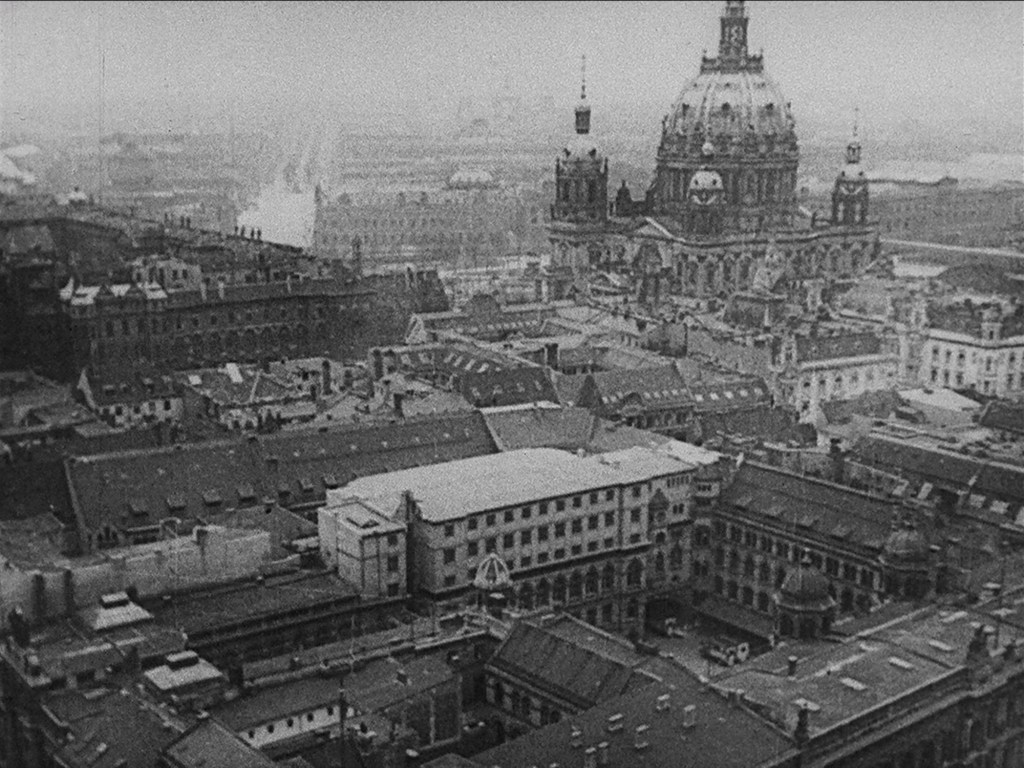
Films at the beginning of this city-film relation were called Film Symphonies where music and film were linked together to represent big cities and the lifestyle of it. One example of it is Walter Ruttmann’s Berlin: Symphony of a Great City, in this film we can see the concept of modernism, the film flows with the music with steady long shots and close-ups of the city, showing how the city awakes from the peace of the early morning to the rush and speed of the city life. It shows the industrial machines and processes of the city showing how grandiose and advance it was at the time. The buildings and objects around the city become more interesting in the image than people ‘When people are introduced into a landscape they have to be handled with caution’ (Klingender, 1968, p. 73)

Berlin: Symphony of a Great City, WalterRuttmann 1927. Germany

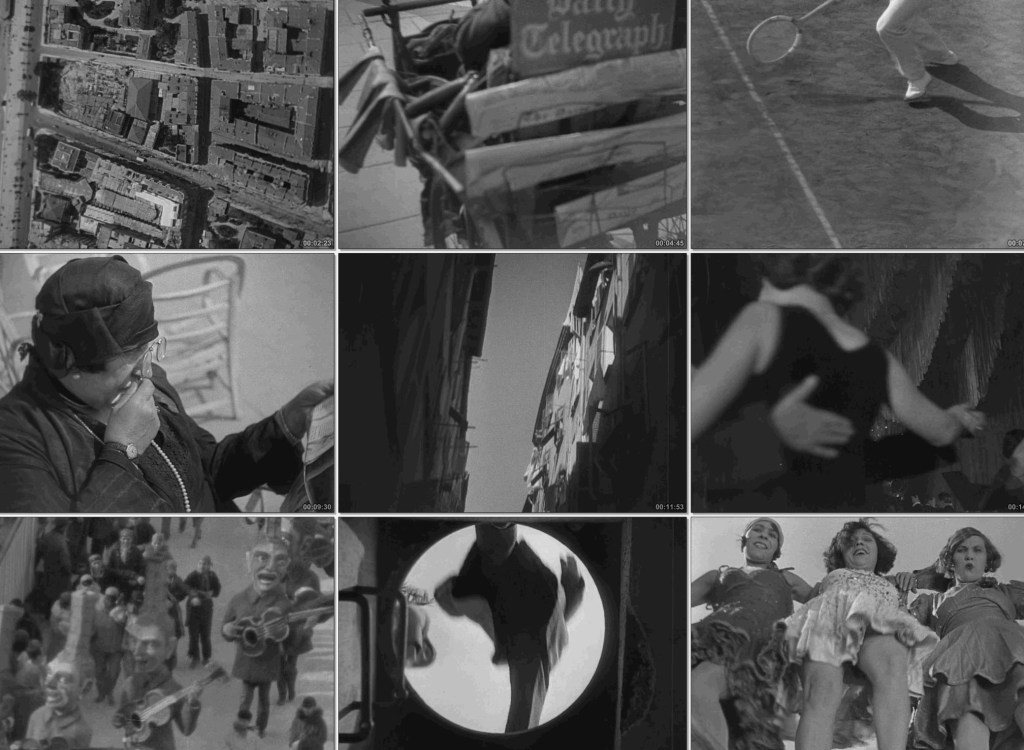
 Another example that shows the modernism of cities and its manufacturing and crowded society is Jean Vigo’s A Propos de Nice, the film uses a more alternative technique, with tilts abrupt movement, overlaying images, changes in pace and angles as well as using handheld which brings the audience to that formality of the city life. The film portraits a festival as well as the poor side of the city, alternating a more intellectual montage with “judging” religious imagery and the “frivolity” of the city festival.

A Propos de Nice, Jean Vigo. 1930. France.

The modernity used in these films shows the role of the individual in the crowded mass society of the city, is based on utilitarianism, form follows the function and is mostly based on minimalist looks (clean lines, large scale) in modernism the city is organised for the goods and production. These movement and imagery transitions to postmodernism, where the city is more valuable for the knowledge and services.

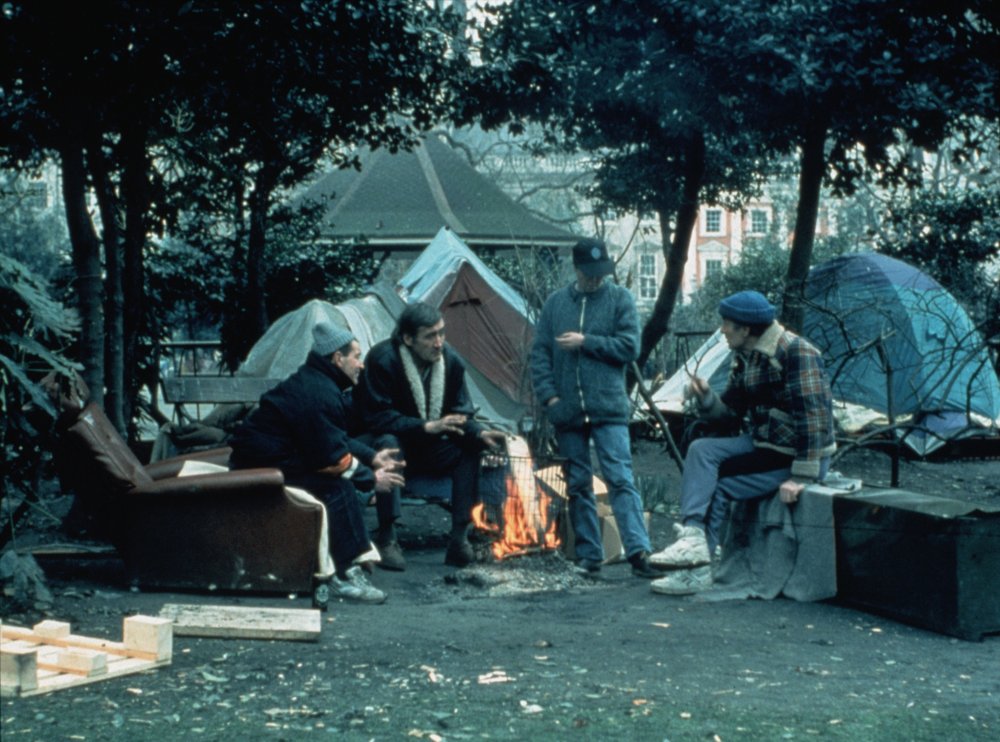
Filmmakers also related to the philosophy around the city and the use of space, this meaning the gated society concept, of an appropriation of space barriers, borders etc and how the class conflict is represented on it directly: Marxism vs capitalism. With these films like Patrick Keiller’s London were made to re-imagine the existing spaces and defamiliarize them from what people this of the building/spaces on a daily basis. This film is a mix of documentary and avant-garde, with a voice-over and wide steady shots, where t brings the post-modern concept of the city as a historical place as an intellectual and political space showing, minorities and the “hidden stories” of buildings

London Patrick Keiller’s 1994. UK.

In conclusion, the relation between film and cinema can be found in different forms where Film provides a visual remnant of the city (the found footage film) where the city can be a space where filmmaker projects an emotional concept (the cine-poem) and Film can allow reimagining existing spaces.

Bibliography:

Klingender Francis D, Art and the Industrial Revolution. 1968.London: Paladin,

Filmography:

A Propos de Nice, Jean Vigo. 1930. France.

Berlin: Symphony of a Great City, WalterRuttmann 1927. Germany

London Patrick Keiller’s 1994. UK.

WEEK 4: The Assemblage Film.

Week 4: ASSEMBLAGE FILM.

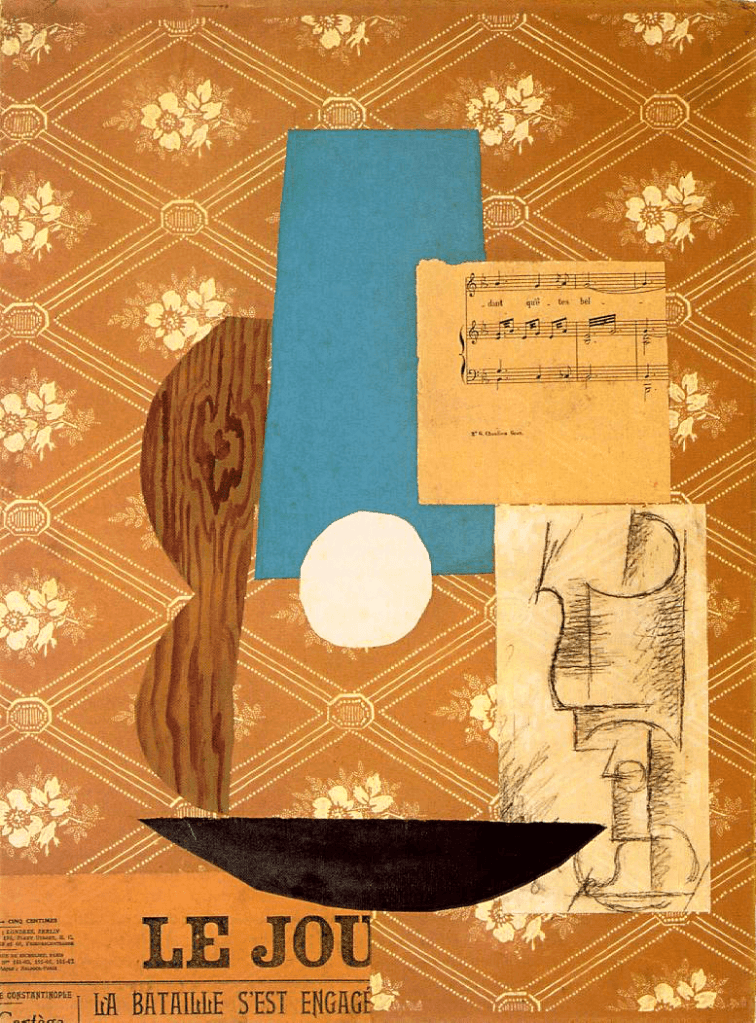
The assemblage film also known as found footage films were born during the early ’20s and it gets the influence from the artistic movement of the same name, where cubist images were made as collages (spatial assemblage) with found objects using them as art materials, as an example of this, we can use Pablo Picasso that used newspaper, wallpaper, stickers, pieces of cardboard or other objects to create his paintings. When it comes to Film a similar technique is used, recycled images from other films, videos, photography or recorded footage are collected and edited together to form a new film and as Wees says, ‘Recycling found footage may require nothing more than finding it and showing it to someone who appreciates it’ (Wees, 1993, p.5 ). Although it seems like it doesn’t require much it does require more understanding from the audience view to search a meaning within the film and to separate the different types of Found footage films that exist.

Pablo Picasso, Guitar, Sheet Music and Glass, 1912. From “Collage – The Making of Modern Art”.

William Wees differentiates between two types. On the first-place Single source films, which are films that use a single film or video and edited to change it to a new product. This first type is explained by Wees

The content of the original footage may continue to be recognizable, but its impact depends principally on its new visual aspect, and in the most extreme cases only hints or fragments of the original images may remain within a kind of filmic palimpsest created by the filmmaker’s erasures and additions.

(1993, p. 26)

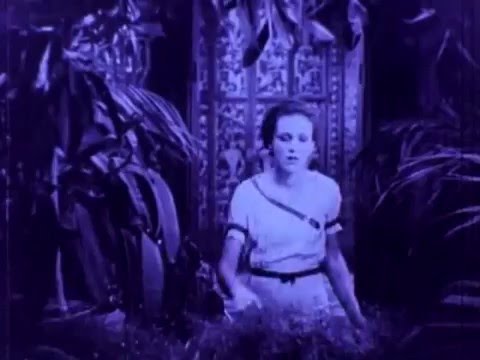
An example of this type is Joseph Cornell’s Rose Hobart that is a re-edition of the film East Borneo. In the film, Cornell cuts sections of the original film to feature Rose Hobart, the actress of the film, in the environment of the film and interacting with it and other characters. It uses entire sequences and re-arranges the narrative in a way where he leads us to try and build a narrative but doesn’t let us. The film links with other types of avant-garde film that we have been viewing as it has a surrealist sense when giving it a dream-like feeling with jump cuts and unrelated correlative actions.

Rose Hobart, Joseph Cornell, 1939. US.Valse Triste, Bruce Conner, 1977. US.

The other type is several sources of films, these films use several films, videos, photos or materials to build a new film. Within this type of films, we can find several types of montage, some examples like intellectual montage, surreal visual poems comic metaphors and analogies and many more. Some examples of these films are Valse Triste by Bruce Conner or Los Angeles Plays Itself by Thom Andersen.

Los Angeles Plays Itself, Thom Andersen, 2003. US.

These films, and single soured films as well, use different techniques like photographing the film, zooming in, cutting, shots, repetition, freeze frames, camera speed. One of the main techniques used was tinting all the footage a monochromatic and consistent colour to give the sense of continuity between the different images that could have different colour, lighting or age.

In Conclusion, films sourced from other materials are creations that still have an impact today and take part of a lot of films today and in history, where meaning making was given a different approach. Within the method there’s many different approaches techniques and types that are too broad to talk about in this paper, but it became a very important influence in filmmaking in history.

Bibliography:

Wees W.  Recycled Images: The Art and Politics of Found Footage Films. (1993). New York: Anthology Film Archives.

Filmography:

Los Angeles Plays Itself, Thom Andersen, 2003. US.

Rose Hobart, Joseph Cornell, 1939. US.Valse Triste, Bruce Conner, 1977. US.

Valse Triste, Bruce Conner, 1977. US.

WEEK 3: MINIMAL FILMS

Week 3: MINIMALIST FILM.

Minimalism in film appeared in the 1960s/’70s with minimalist art, where abstraction with its symbology and subjectivity were challenged and the artist focused on the medium used and presenting unconventional materials and avoiding the human influences on the pieces, ‘The minimal artists rejected the idea that art should reflect the personal expression of its creator. The work of art should refer to the art itself. The creation must be objective, in-expressive and non-referential.’ (Student Filmer, 2019).

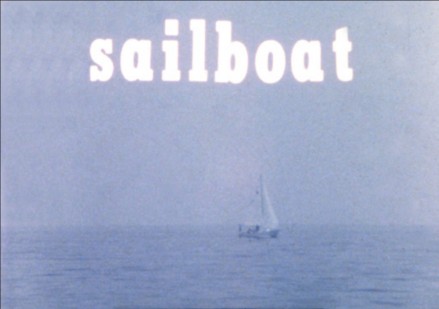
Specifically, in Film, we can see the use of film stock and different techniques to explore the materials that Film provides. Filmmakers not only explored the production possibilities, of movement or film stock effects but also in editing, with jump cuts or repetition. One of the most remarkable features of the minimalist film is the use of expectation, how the filmmakers make the audience ask themselves what will happen next in the narrative and how will change. As an example, we observe the film Sailboat by Joyce Wieland where we see the sea and several sailboats moving side to side, maybe by themselves or by the panning of the camera. We see how she plays with movement and variation of speed and length and the expectation of what else will happen in the film until she presents a human figure for the first time.

Sailboat, Joyce Wieland, (1967). Canada.

These also called structural films, base their structure or some rules that follow a thematic, like numbers, a single movement, or a single object (e.g Empire by Andy Warhol). Even if these films have a minimalistic aspect to them, we can still extract a more philosophical aspect to them where the audience are put under unusual length or points of view making viewers question and reflect the meaning of the film, ‘Probably the central reason why these films have been seen as philosophical is that they are self-reflective. That is, they make the medium of film as their subject matter; they are films about film.’ (Wartenberg,2007 p.117)

Empire, Andy Warhol (1964). US

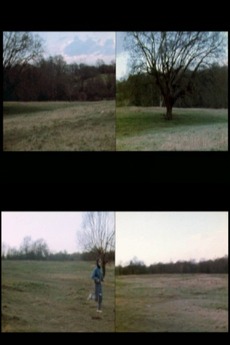
With the “game” of expectation, chance became an important role in these minimalist films, as audience members would be more attentive to these random situations in a long static film as something as quotidian as a field or a building. The chance technique was also borrowed from artist like Jackson Pollock who left the materials (paintings) fall on canvas however the paint “wanted” to fall. Chance is applied in film in different ways, by letting the environment bring something (e.g. a person randomly walking in front of the camera) or nature takes the role of the filmmaker as we can see in the film Wind Vane by Chris Welsby.

In the film Wind Vane, the director built a tripod that sustained two cameras and let them in a field where the wind would move the cameras like wind vanes, giving the sensation that the wind “chooses” what to film and show, coming again to that chance technique used in structural films. From this film, you could take how nature is involved in filming not only in the image but in the way that is made coming back to the principal that minimalist filmmakers followed of reducing the involvement of humans in filmmaking.

Wind Vane, Chris Welsby. (1972).UK

Structural or minimalist film then uses the minimal human involvement and leaves the meaning and situations to the small audience to understand or withdraw the meaning of the films being created, exploring how nature is involved in filmmaking and how film can be used as a material, not only as a moving image but as sound as well.

Bibliography:

Student Filmer, 2019, Minimalist Film: A Thought. Available on Student Filmer Webpage: https://studentfilmer.com/2015/08/17/minimalism-in-filmmaking-a-thought/ [Accessed 5th of February]

Wartenberg, Thomas E. Thinking on Screen: Film as Philosophy. (2007). Routledge: London and New York

Filmography:

Empire, Andy Warhol (1964). US

Sailboat, Joyce Wieland, (1967). Canada.

Wind Vane, Chris Welsby. (1972).UK

Week 2: CINE-POEM

Film and Enviroment

CINE-POEM

Film and the Enviroment

WEEK 2:

Cine-poem also is known as film poetry doesn’t have a unique definition, as is been interpreted and used in a different way by different filmmakers and theorist. Each author employed their own interpretation of what cine-poem could be. The term was born with Avant-Garde film in the early 20 century and it’s related to Impressionism (painting) that drew from the notion of poetry raise. The term could be attributed to Germaine Dulac who compared the Hollywood mainstream cinema with prose or novelistic while the alternative avant-garde film fitted better with how poetry was written.

Avant-Garde, and in particular cine-poem, is also linked to different political and social movements of the early 20th century like Marxism as these opposites with capitalism. So, the films can be portraited as the mainstream Hollywood cinema to the capitalist view, as it tends towards “Kitsch” (artistic style) that is to say banal, cliché and Avant-Garde take the place of a self-conscious opposition being innovation, formerly explorational or novelty.

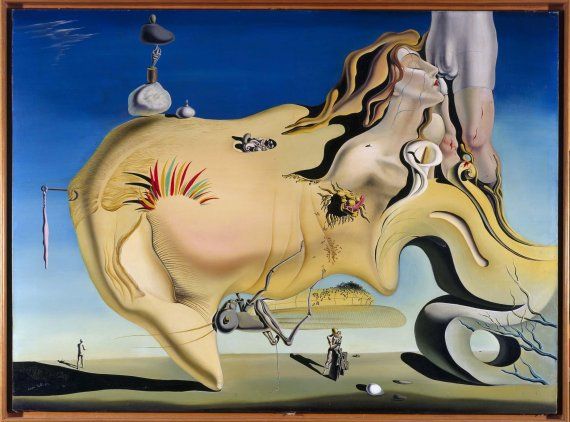
Cine-Poem is clearly influenced by surrealism for its irrational, illogical and dream-like scenarios with a planned structure. We see films with the main themes of dreams and nightmares where the filmmakers explore a more Freudian (also a change in the notion of the reality of the early 20th century) narrative about the unconscious and uncensored abstract images representing and mimicking dreams.

Rostro del gran Masturbador. Salvador Dalí. 1929.

As an example of this, we can find Maya Deren’s film At Land (1944) where she represents a dreamlike narrative, where she passes numerous locations and seemingly time and people. We see smooth transitions, slow motion, reverse shots and repetition which makes the images look more like a dream or nightmare. In this case, the film does show the main character in an irrational journey making us find our own meaning to it.

At Land Maya Deren. 1944

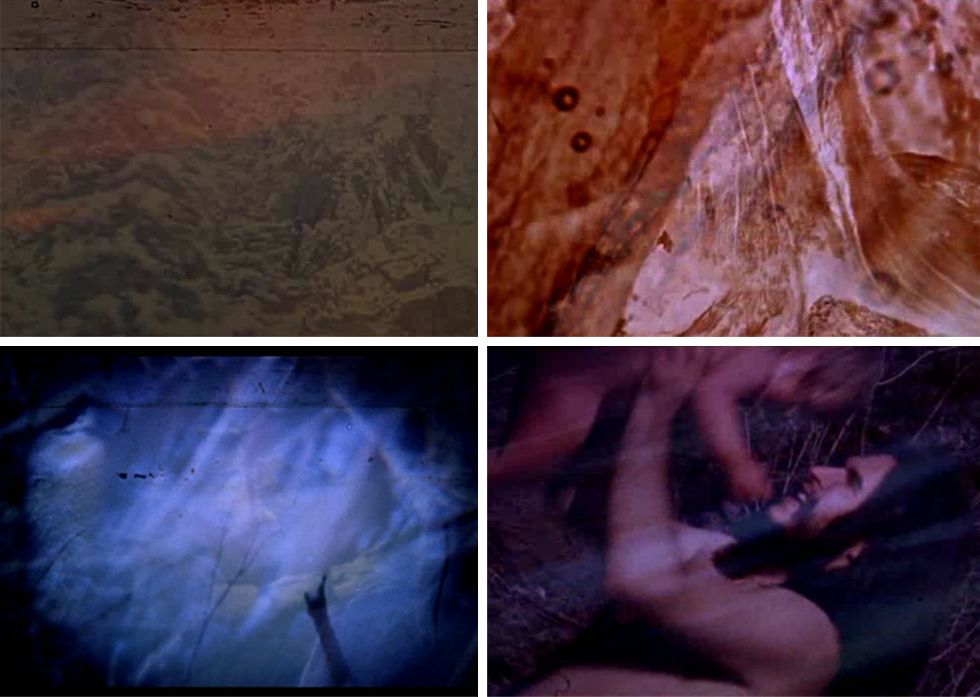
In other techniques of this method, we find a more medium-specific film, where it looks like the main theme is the different properties of the material(film) experimenting with it and finding different aspects to a recorder image. This reminds of impressionism or modernism where the artists experimented with paint and are more tooled based than story-based. In this technique of materialist films, we find Stan Brakhage’s Dog Star Man: Prelude (1961-4) where the more formalistic different types of using film are appreciated. In a long, silent, 20 minutes (around) we can see themes but no narrative or character, the sky, space and nature or environment is appreciated in glimpses between scratched film, gel, coloured film and overlay images.

Dog Star Man. Stan Brakhage . 1961-4

These films were directly connected with the environment, where the artists had a concept of nature as something sublime, uncontrollable, majestic, mysterious while the more “human habitats” landscapes are rural, calm and grazing. This concept is hugely influenced by American landscape painting. The authors go back to basics exploring what both natures have to offer and what the material can allow experimenting.

The same way is referred by James Peterson how avant-garde film is viewed by audiences, the cine-poem makes the same links, where the viewer finds some casual links in the images and interprets them in different ways looking at more visual connections to the different images.

Although difficult to define, Cine-Poem is identified and challenges the audience capability of meaning-making and understanding of the own method of filming, as well as bringing a connection with nature and the way is perceived as humans in the land that the viewers see represented in more materialistic and poem film cinema.

Bibliography

Leropoulos, F. (2017) Film Poetry: A Historical Analysis. Available at Poetry Film web page: http://poetryfilmlive.com/film-poetry-a-historical-analysis/ [ Accessed 28th of January 2020]

Filmography

At Land (1944) Deren. M .US.

Dog Star Man: Prelude (1961-4) Brakhage. S. US.

Week 1: Avant-Garde

(Visit to the Tate Modern)


AVANT-GARDE

The Avant-Garde, meaning works that are experimental, radical, or unorthodox with respect to art, culture, or society extended to film making during the early 20th century, with the new art movement of modernism, with cubism, futurism or Dadaism as different styles. The avant-garde film found inspiration in these movements getting away from the mainstream, commercial cinema of Hollywood. Some of the forms used in Avant-Garde are alterations in space and time (alteration distortion), abstraction and a subversion of the relationship between everyday objects and art with everyday life. This forms as mentioned before are influenced by artists in the modernist movements, like Jackson Pollock (with the chance technique later reflected on minimalist film), Helen Frankenthaler (Abstract expressionism) or Rothko with many others which we saw and compared in the Tate Modern museum in London.

Adding to this we can find different strains within Avant-Garde film including the poetic strain, The minimal strain and the Assemblage strain which we will see more in-depth in future lectures. In these films, we see that one of the main recurring themes by alternative filmmakers is environments and dreams/nightmares as it gives them the freedom to represent them in an abstract or deconstructed way.

As these films diverge from mainstream films with a linear or recognisable narrative, this “new” films demanded a “new” audience that wasn’t presented with a clear meaning, message or narrative in the film that was being presented for them ‘[…] the viewer of the classical Hollywood cinema generally starts with a reasonably well-defined goal.’ (Peterson, 1994, p. 20). The audience encountered films with “ill-structured problems” which don’t have a single solution or meaning in them but rather lets the audience get their own meaning and story of the film (Peterson, 1994, p. 20) This shows how Avant-Garde film viewing is about finding the overall theme and structure of the film rather than following an “obvious structure ‘Viewers do not simply try to find any schematic structure that will fit; they try to find schematic structures that establish coherence for the whole film.’ (Peterson, 1994, p. 19)

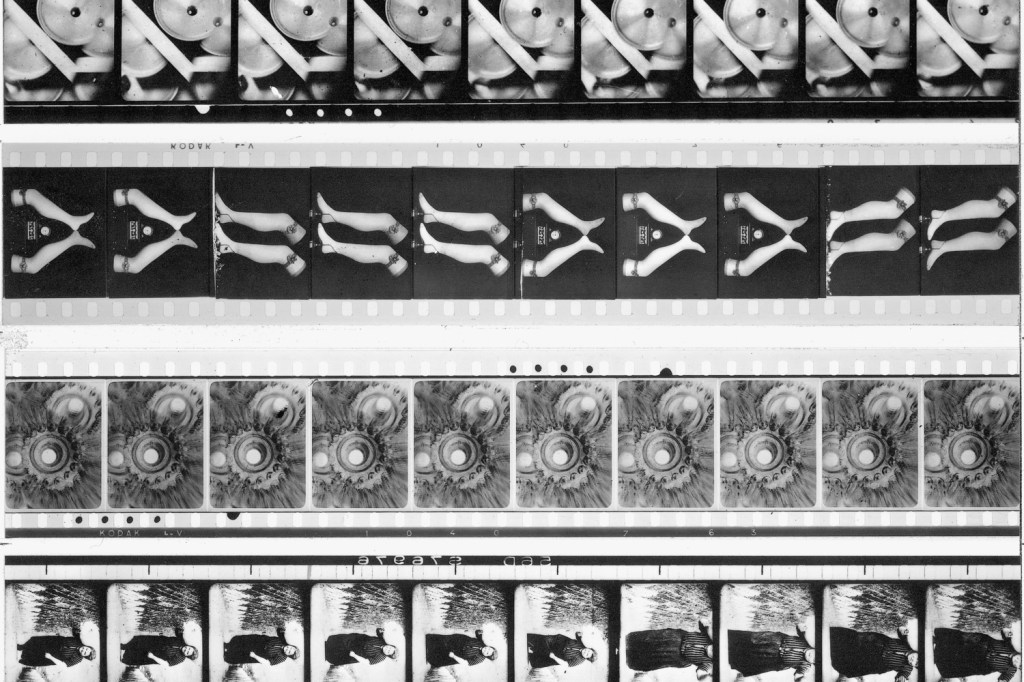
As an example of all of these different forms and influences we can see Ballet Méchanique (1924) In specific this film uses the abstract form where there’s a motif of everyday objects and nature against the machinery images that portraits (factory engines, woman body parts). In the images we can also distinguish some shapes or geometrical forms like squares, triangles and so on, that reminds us of the art form of cubism. In the film, there’s no clear pattern or correlation of the images at first but it links familiar shapes or spaces and deconstructs them to frame it differently than what we see every day. Mixes the familiar with the unfamiliar and it uses deconstruction of images and repetition to make it abstract. As mentioned, the meaning of the film comes from each viewer, but we can conclude that Léger made natural forms look like machines creating loops images imitating machines working and, in the contrast, making industrial machines have a flow in them that almost makes them look more natural.

Laughter and Three Shorts Ballet Mechanique .Cinémathèque Française

In conclusion, we can appreciate how Avant-Garde borrowed from other artists the concepts, forms and way of thinking, influencing from a different kind of art to bring a new model of film that requires a different type of viewing and meaning-making. Put of this I was also capable of abstract some influences for my alternative film by looking at different artists, films and paintings like the use of film itself, music, beats, and different camera techniques as well as themes.


Bibliography:

MoMa (2019) Laughter and Three Shorts. Cinémathèque Française

Peterson, J. (1994) Dreams of Chaos, Visions of Order: Understanding the American Avant-garde Cinema. Detroit: Wayne State University Press, pp. 17-25.

Filmography:

Ballet Méchanique (1924), Fernand Léger and Dudley Murphy.

Design a site like this with WordPress.com
Get started