Film and Enviroment
CINE-POEM
Film and the Enviroment
WEEK 2:
Cine-poem also is known as film poetry doesn’t have a unique definition, as is been interpreted and used in a different way by different filmmakers and theorist. Each author employed their own interpretation of what cine-poem could be. The term was born with Avant-Garde film in the early 20 century and it’s related to Impressionism (painting) that drew from the notion of poetry raise. The term could be attributed to Germaine Dulac who compared the Hollywood mainstream cinema with prose or novelistic while the alternative avant-garde film fitted better with how poetry was written.
Avant-Garde, and in particular cine-poem, is also linked to different political and social movements of the early 20th century like Marxism as these opposites with capitalism. So, the films can be portraited as the mainstream Hollywood cinema to the capitalist view, as it tends towards “Kitsch” (artistic style) that is to say banal, cliché and Avant-Garde take the place of a self-conscious opposition being innovation, formerly explorational or novelty.
Cine-Poem is clearly influenced by surrealism for its irrational, illogical and dream-like scenarios with a planned structure. We see films with the main themes of dreams and nightmares where the filmmakers explore a more Freudian (also a change in the notion of the reality of the early 20th century) narrative about the unconscious and uncensored abstract images representing and mimicking dreams.
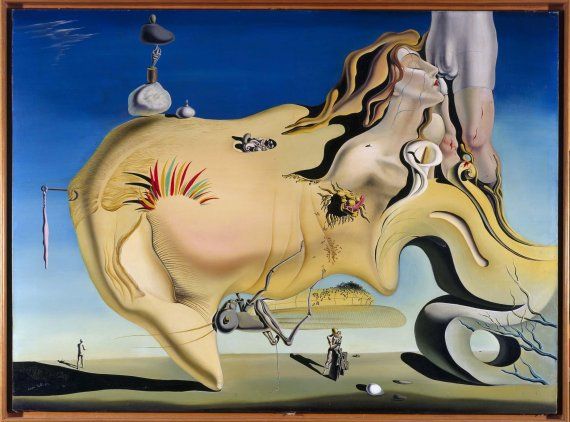
As an example of this, we can find Maya Deren’s film At Land (1944) where she represents a dreamlike narrative, where she passes numerous locations and seemingly time and people. We see smooth transitions, slow motion, reverse shots and repetition which makes the images look more like a dream or nightmare. In this case, the film does show the main character in an irrational journey making us find our own meaning to it.

In other techniques of this method, we find a more medium-specific film, where it looks like the main theme is the different properties of the material(film) experimenting with it and finding different aspects to a recorder image. This reminds of impressionism or modernism where the artists experimented with paint and are more tooled based than story-based. In this technique of materialist films, we find Stan Brakhage’s Dog Star Man: Prelude (1961-4) where the more formalistic different types of using film are appreciated. In a long, silent, 20 minutes (around) we can see themes but no narrative or character, the sky, space and nature or environment is appreciated in glimpses between scratched film, gel, coloured film and overlay images.
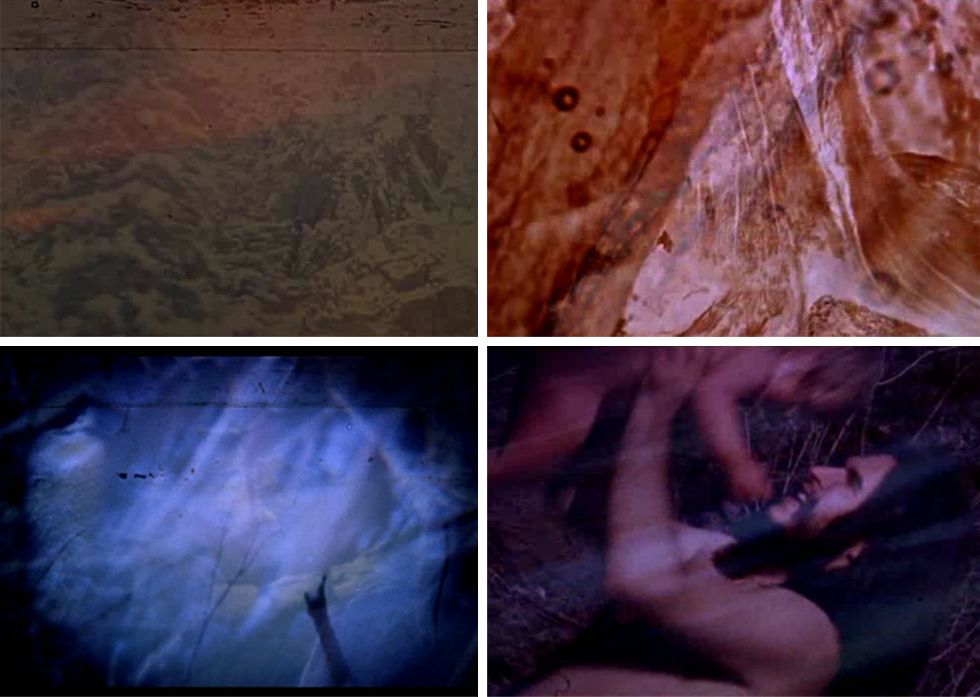
These films were directly connected with the environment, where the artists had a concept of nature as something sublime, uncontrollable, majestic, mysterious while the more “human habitats” landscapes are rural, calm and grazing. This concept is hugely influenced by American landscape painting. The authors go back to basics exploring what both natures have to offer and what the material can allow experimenting.
The same way is referred by James Peterson how avant-garde film is viewed by audiences, the cine-poem makes the same links, where the viewer finds some casual links in the images and interprets them in different ways looking at more visual connections to the different images.
Although difficult to define, Cine-Poem is identified and challenges the audience capability of meaning-making and understanding of the own method of filming, as well as bringing a connection with nature and the way is perceived as humans in the land that the viewers see represented in more materialistic and poem film cinema.
Bibliography
Leropoulos, F. (2017) Film Poetry: A Historical Analysis. Available at Poetry Film web page: http://poetryfilmlive.com/film-poetry-a-historical-analysis/ [ Accessed 28th of January 2020]
Filmography
At Land (1944) Deren. M .US.
Dog Star Man: Prelude (1961-4) Brakhage. S. US.
 Alternative Film