(Visit to the Tate Modern)
AVANT-GARDE
The Avant-Garde, meaning works that are experimental, radical, or unorthodox with respect to art, culture, or society extended to film making during the early 20th century, with the new art movement of modernism, with cubism, futurism or Dadaism as different styles. The avant-garde film found inspiration in these movements getting away from the mainstream, commercial cinema of Hollywood. Some of the forms used in Avant-Garde are alterations in space and time (alteration distortion), abstraction and a subversion of the relationship between everyday objects and art with everyday life. This forms as mentioned before are influenced by artists in the modernist movements, like Jackson Pollock (with the chance technique later reflected on minimalist film), Helen Frankenthaler (Abstract expressionism) or Rothko with many others which we saw and compared in the Tate Modern museum in London.
Adding to this we can find different strains within Avant-Garde film including the poetic strain, The minimal strain and the Assemblage strain which we will see more in-depth in future lectures. In these films, we see that one of the main recurring themes by alternative filmmakers is environments and dreams/nightmares as it gives them the freedom to represent them in an abstract or deconstructed way.
As these films diverge from mainstream films with a linear or recognisable narrative, this “new” films demanded a “new” audience that wasn’t presented with a clear meaning, message or narrative in the film that was being presented for them ‘[…] the viewer of the classical Hollywood cinema generally starts with a reasonably well-defined goal.’ (Peterson, 1994, p. 20). The audience encountered films with “ill-structured problems” which don’t have a single solution or meaning in them but rather lets the audience get their own meaning and story of the film (Peterson, 1994, p. 20) This shows how Avant-Garde film viewing is about finding the overall theme and structure of the film rather than following an “obvious structure ‘Viewers do not simply try to find any schematic structure that will fit; they try to find schematic structures that establish coherence for the whole film.’ (Peterson, 1994, p. 19)
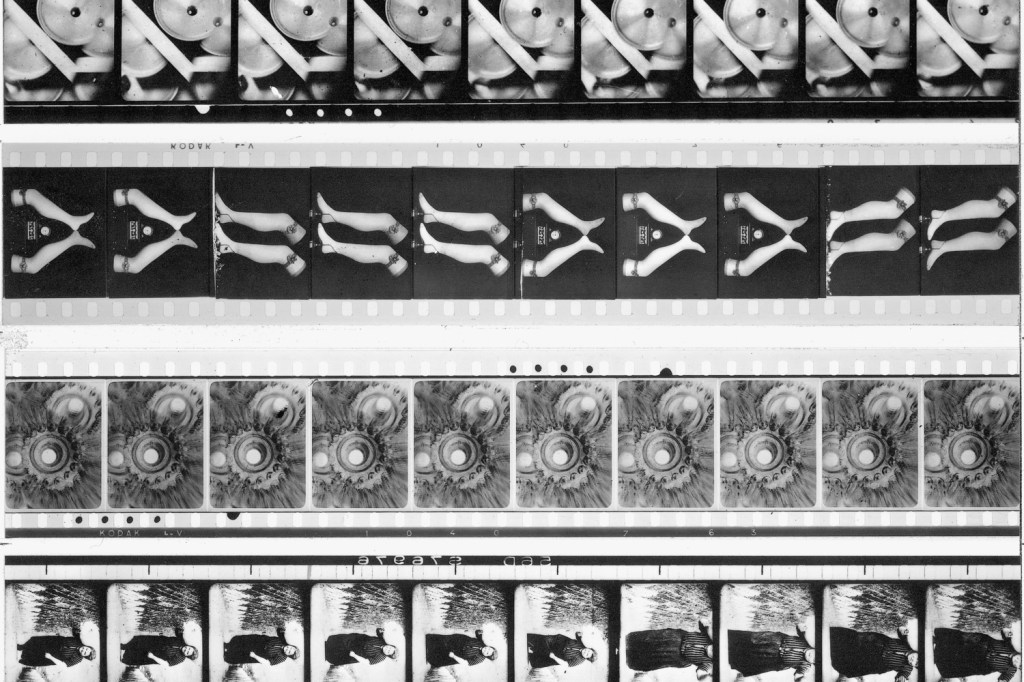
As an example of all of these different forms and influences we can see Ballet Méchanique (1924) In specific this film uses the abstract form where there’s a motif of everyday objects and nature against the machinery images that portraits (factory engines, woman body parts). In the images we can also distinguish some shapes or geometrical forms like squares, triangles and so on, that reminds us of the art form of cubism. In the film, there’s no clear pattern or correlation of the images at first but it links familiar shapes or spaces and deconstructs them to frame it differently than what we see every day. Mixes the familiar with the unfamiliar and it uses deconstruction of images and repetition to make it abstract. As mentioned, the meaning of the film comes from each viewer, but we can conclude that Léger made natural forms look like machines creating loops images imitating machines working and, in the contrast, making industrial machines have a flow in them that almost makes them look more natural.
In conclusion, we can appreciate how Avant-Garde borrowed from other artists the concepts, forms and way of thinking, influencing from a different kind of art to bring a new model of film that requires a different type of viewing and meaning-making. Put of this I was also capable of abstract some influences for my alternative film by looking at different artists, films and paintings like the use of film itself, music, beats, and different camera techniques as well as themes.
Bibliography:
MoMa (2019) Laughter and Three Shorts. Cinémathèque Française
Peterson, J. (1994) Dreams of Chaos, Visions of Order: Understanding the American Avant-garde Cinema. Detroit: Wayne State University Press, pp. 17-25.
Filmography:
Ballet Méchanique (1924), Fernand Léger and Dudley Murphy.
 Alternative Film